
channels a B2B buyer touches before a deal, double the count in 2016, McKinsey
First Time at a Trade Show in a New Region - and They Already Expect You. This Article Explains How.
A trade fair puts the right people in one hall, which is a fair reason to go. But a distributor at your stand has a few minutes for a brand they have never heard of. If nothing preceded that meeting, the stand has to introduce you, prove you are competent and move toward a deal in the same conversation. That is too much for three minutes.
Everyone in the hall is a target. You are still a stranger.
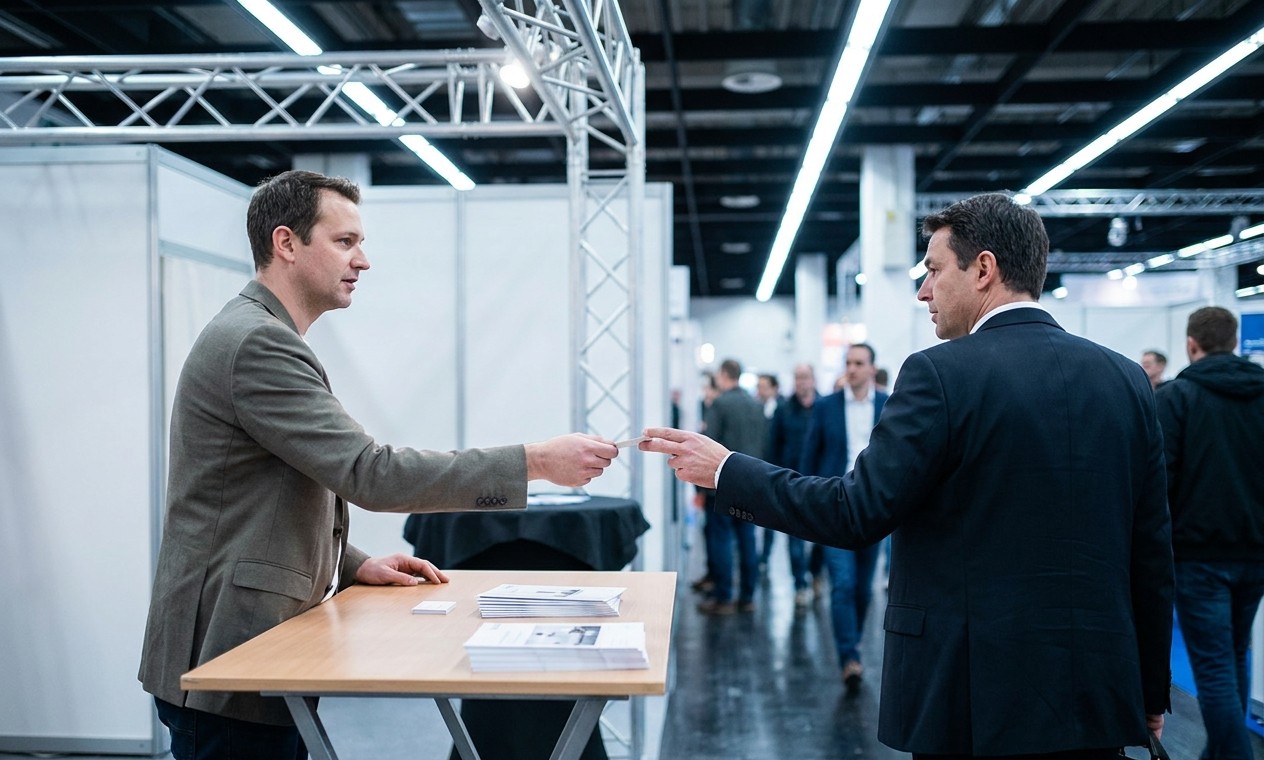
A manufacturer of interior materials from Italy, Korea or Germany takes a stand at a sector fair in Almaty, Tashkent or Moscow. The product works, the plant runs, there is a catalogue, certificates, projects at home. Competitors are set up along the same aisle. Distributors, specifiers, developers and contractors walk past.
This is the target audience. The complaint about the wrong people showing up does not apply here.
The difficulty sits elsewhere. The distributor already has suppliers. The architect has brands they reach for. The buyer knows that a new foreign name brings its own list of questions: lead times, documents, minimum order, spare parts, service, currency, support on the first shipment. They need to work out whether a second meeting is worth the calendar slot.
All of this happens at a stand, among noise and coffee and twenty other companies saying much the same thing about quality, flexible terms and years of experience.
Someone can be genuinely interested. Take the catalogue, scan the code, ask for a contact. Then the fair ends and they go back to their job, where the decision has to be defended to colleagues or a director. That is where the real assessment of your brand starts.
They open the site. They look for the product. They check whether there are legible projects, partnership terms, documentation, published material, a local contact. They forward the link. They compare you against names they already trust.
If there is nothing to continue the acquaintance with, the conversation from the stand dissolves inside a week.
A stand does things digital cannot
Writing off the exhibition would be wrong. For furniture, machinery, finishing materials, industrial products and complex components, a stand offers what no banner or post will: a sample in your hands, an assembly you can watch, a technical question answered by someone who knows the product, and the sense that a real company stands behind the renders.
Exhibitors themselves rank their goals in exactly this order. CEIR's research puts lead generation first among reasons to exhibit, with brand awareness second. Two objectives that an unknown brand has to serve with one conversation inside the same three minutes.
The physical meeting works harder when it does not start from zero.
If the brand has already crossed the buyer's professional field of view, they approach with a different question. Not who are you, but I have seen your product, let us look at terms. The wording shifts slightly and the conversation moves a rung up.
In the first case the person on the stand spends the time on a basic introduction. In the second they discuss volumes, range, delivery, projects and the next step. One conversation creates interest. The other moves a deal.
Becoming checkable before you travel
The market is not obliged to take a new manufacturer's word for anything. Particularly where a partner's mistake costs a delayed site, a client claim, or money frozen in stock.
So the useful thing to assemble before a fair is a body of evidence rather than a campaign, something a person can work through alone with no salesperson beside them. It looks unglamorous. A page or section for the region that shows how the company actually operates. Materials translated properly, rather than a catalogue addressing a local market in head-office language. Range, partnership terms, delivery and technical support written out rather than implied. Projects that show the product in use rather than photographs of a finished building. And a channel where the brand can be met before the fair and found after it.
McKinsey's B2B Pulse counts around ten interaction channels in the average B2B buying journey, against five in 2016. The same work sets out a rule of thirds: at any stage roughly a third of buyers want an in-person exchange, a third want it remote, and a third would rather work it out themselves through digital channels.
Betting on a single route to acquaintance does not hold. Even after meeting you at a fair, the buyer goes online. Even after finding you through advertising, at some point they want a meeting and a sample.
Exhibitions and digital are not in competition. They cover different sections of the same deal.
What changes when the brand arrives before the stand
Preparation ahead of a fair guarantees no contracts. It does something else: it removes part of the uncertainty before the expensive personal work begins.
Before the event you can see which countries and segments the interest comes from, which materials get read, which products draw a response, which questions arrive first. Conversations with a few prospective partners can start early, and those people can be invited to the stand by name.
The fair gets a task list instead of a blanket target to collect leads.
The number of conversations may stay the same. What shifts is the share of them that continue. So does the work afterwards: the account manager stops re-explaining, in every follow-up email, who you are and what you make.
There is a figure here that rarely comes up in exhibition planning. Les Binet and Peter Field went through the first B2B cut of the IPA databank, covering 1998 to 2018, for the LinkedIn B2B Institute, and estimated how a budget should divide between brand building and activation, meaning direct lead generation. In B2C the balance lands near 60/40 in favour of brand. In B2B, by their data, efficiency peaks at roughly 46% brand and 54% activation. The authors ask readers not to take the ratio literally, since the sample is small and the optimum moves by category.
The direction is clear enough. Close to half the work goes into being recognised, and that half happens before anyone discusses a shipment. A stand asked to cover both halves at once is expensive for exactly that reason.
Sequence beats channel
A brand can fly in, meet the market over three days, gather contacts, and then start explaining why it is worth working with.
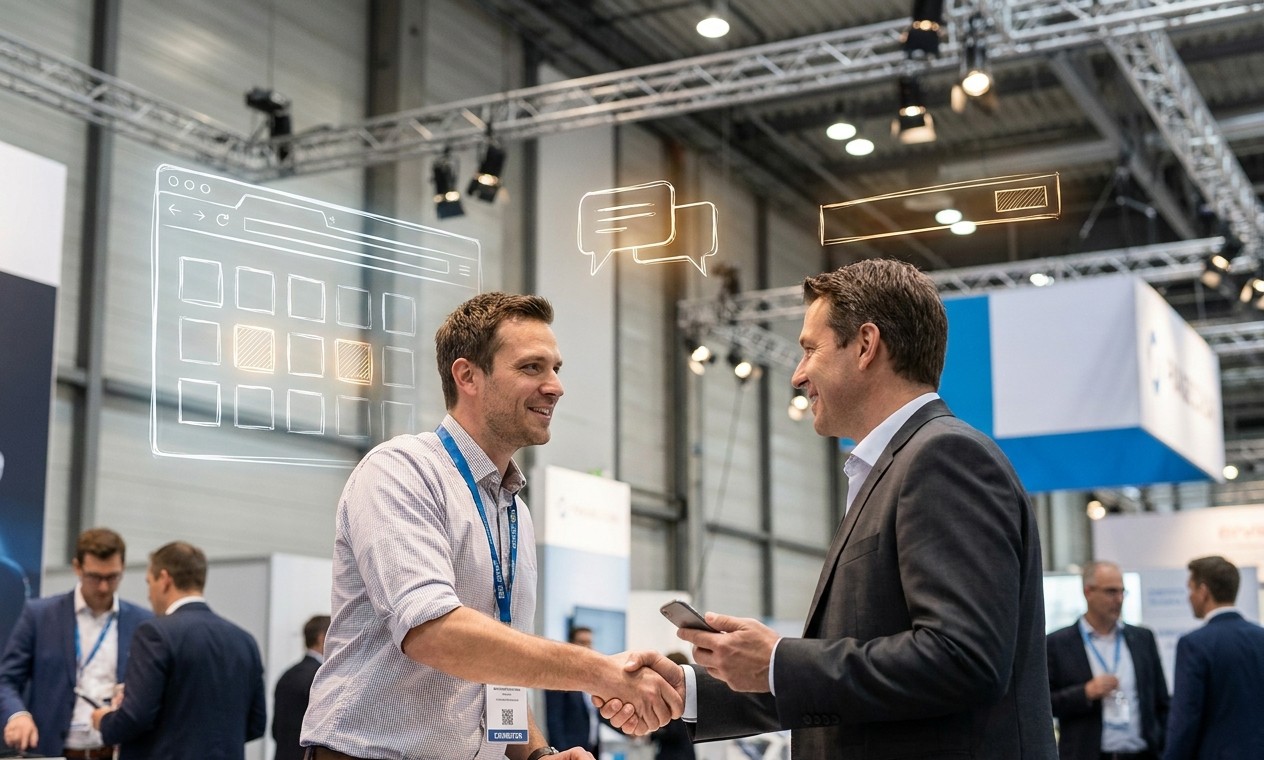
Or it can build a local presence first, test the interest, find the first contacts, and travel to continue conversations already underway.
The second route does not make the exhibition less important. It makes it sharper. The company brings a story shaped for that market, knows which questions are coming, knows who it wants to see, and knows what will hold the interest afterwards.
The preparatory part is handled by various teams working on international market entry: they study the market, build the site and the materials, run content and traffic, help with the first contacts. Artifact works in that logic for foreign B2B manufacturers heading into CIS and Central Asia.
The exhibition gives you access to people. A prepared presence gives those people a reason not to forget you by the next morning.