
all it takes to judge a homepage, before a word is read
You Already Have a Site. Do You Need a New One for CIS or Central Asia
The company already has a website. It works, it took months to sign off, and the whole home market runs on it. Building a second one sounds like an unnecessary expense when the existing one can simply be translated. The problem is that a website carries an idea of what a company worth dealing with looks like. In another market that idea is different, and translation does not change it.
We took the homepages of six machine-tool manufacturers from six countries, at the same screen size, each in its own language.
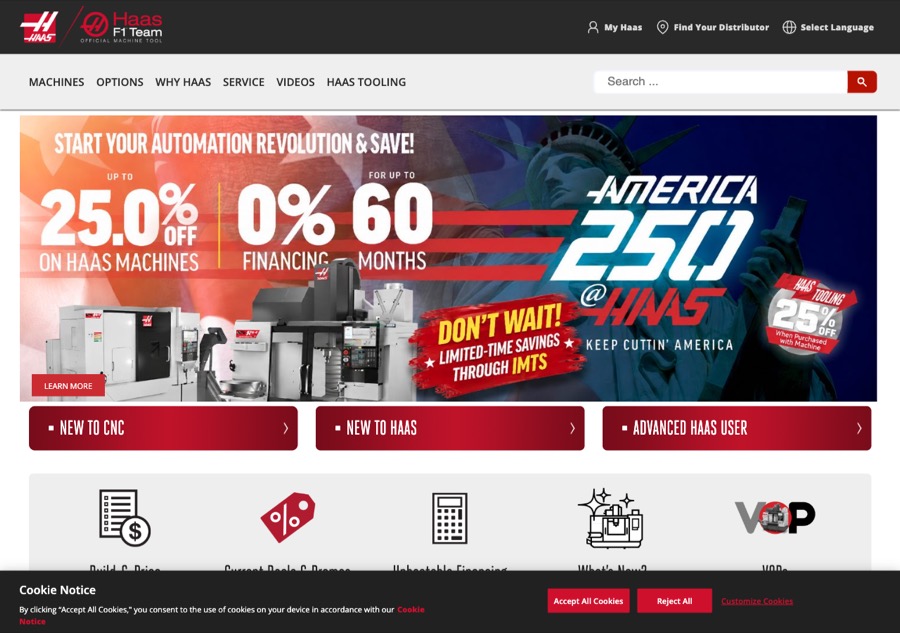
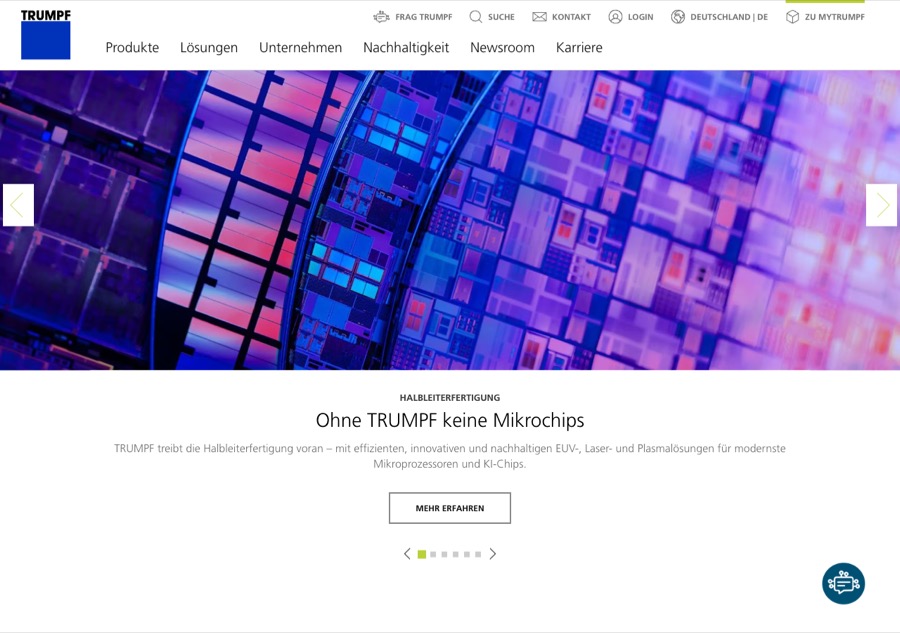
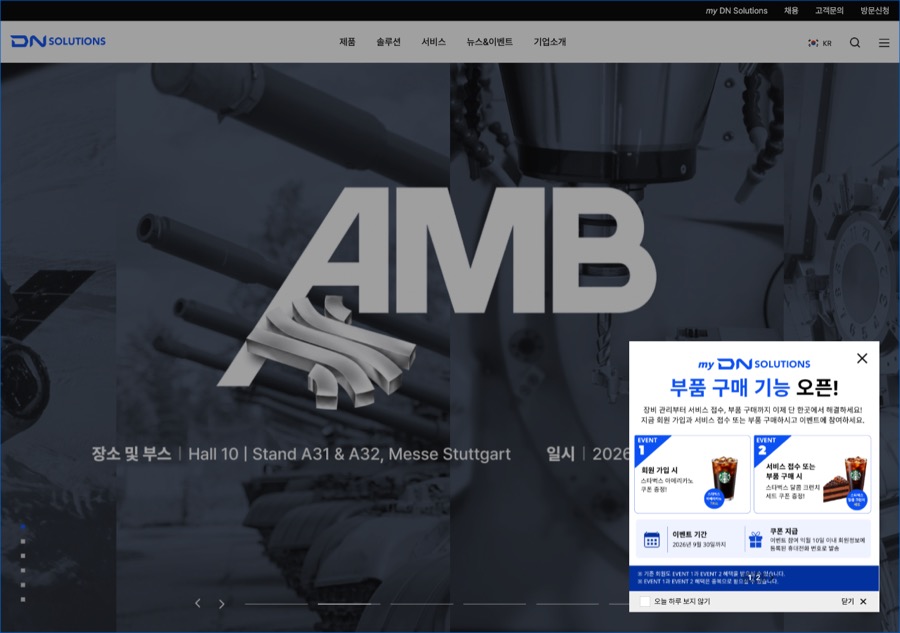
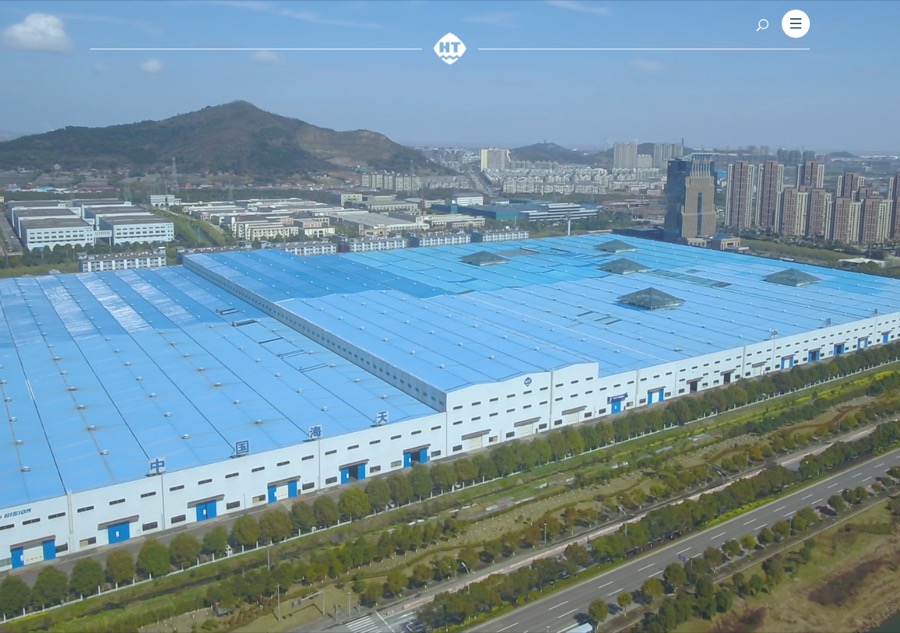
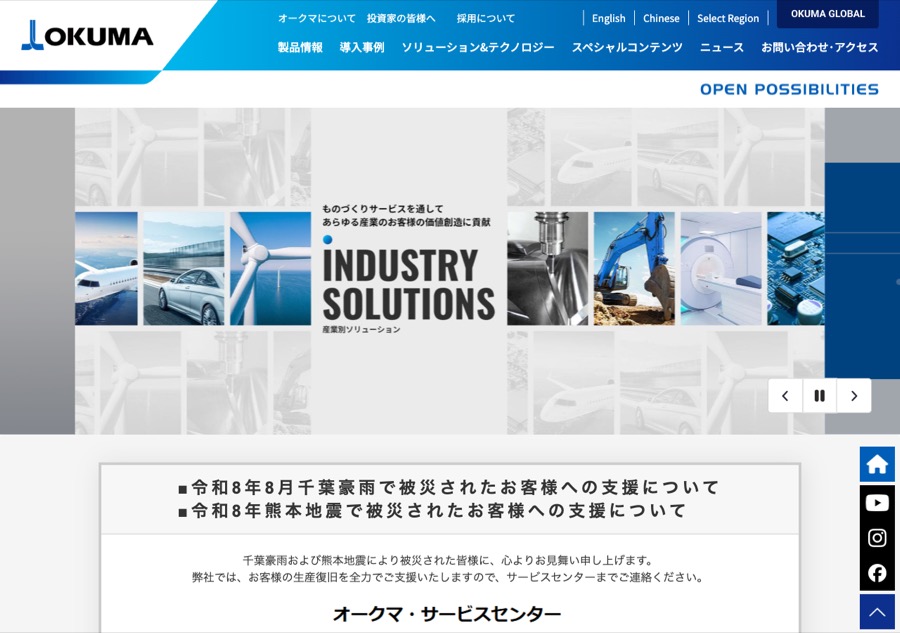
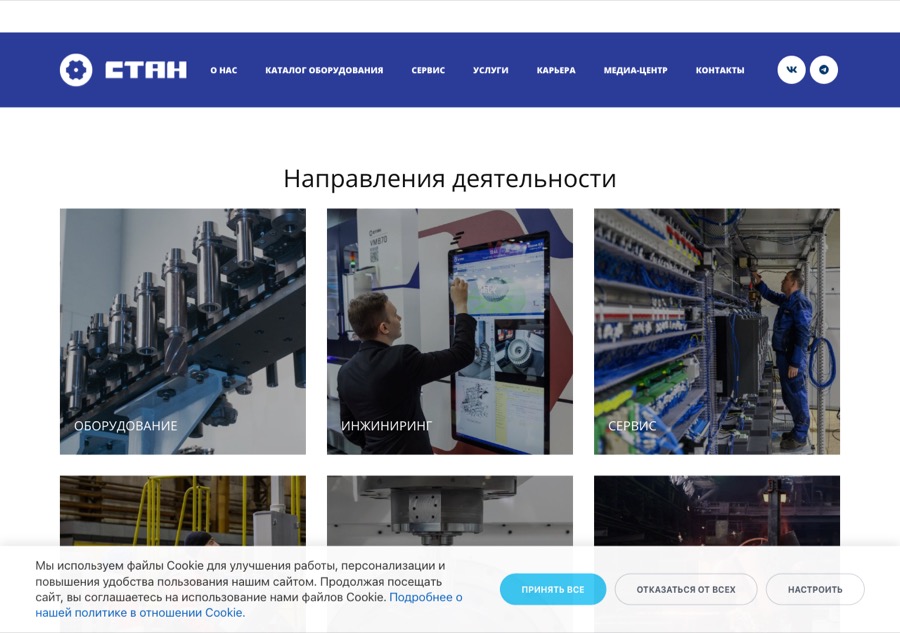
Haas Automation in the United States opens on a sale: up to 25% off, 0% financing for 60 months, a deadline. TRUMPF in Germany shows one photograph and one line of text. DN Solutions in Korea runs a trade-fair banner with a sign-up coupon layered over it. Haitian Precision in China opens on an aerial photograph of its own plant. Okuma in Japan fills the screen with a machine photo annotated across the frame. STAN in Russia lays out a grid of cards: Equipment, Engineering, Service, each over a workshop photo.
Not one of the six is done wrong. These are working companies, and each knows its own market better than an outsider does. But show a German buyer the Haas page and he sees a clearance sale, not a machine-tool builder. Show an American the TRUMPF page and he cannot tell what is for sale. Both pages make money where they were built.
This is not about execution quality. Every market has settled on its own idea of what a serious supplier looks like, and it settled there through experience: people spent years seeing a certain kind of site around them and learned to tell the established from the accidental by it. Presentation works as a signal of belonging. It says: we have been here a while, we know how things are done.
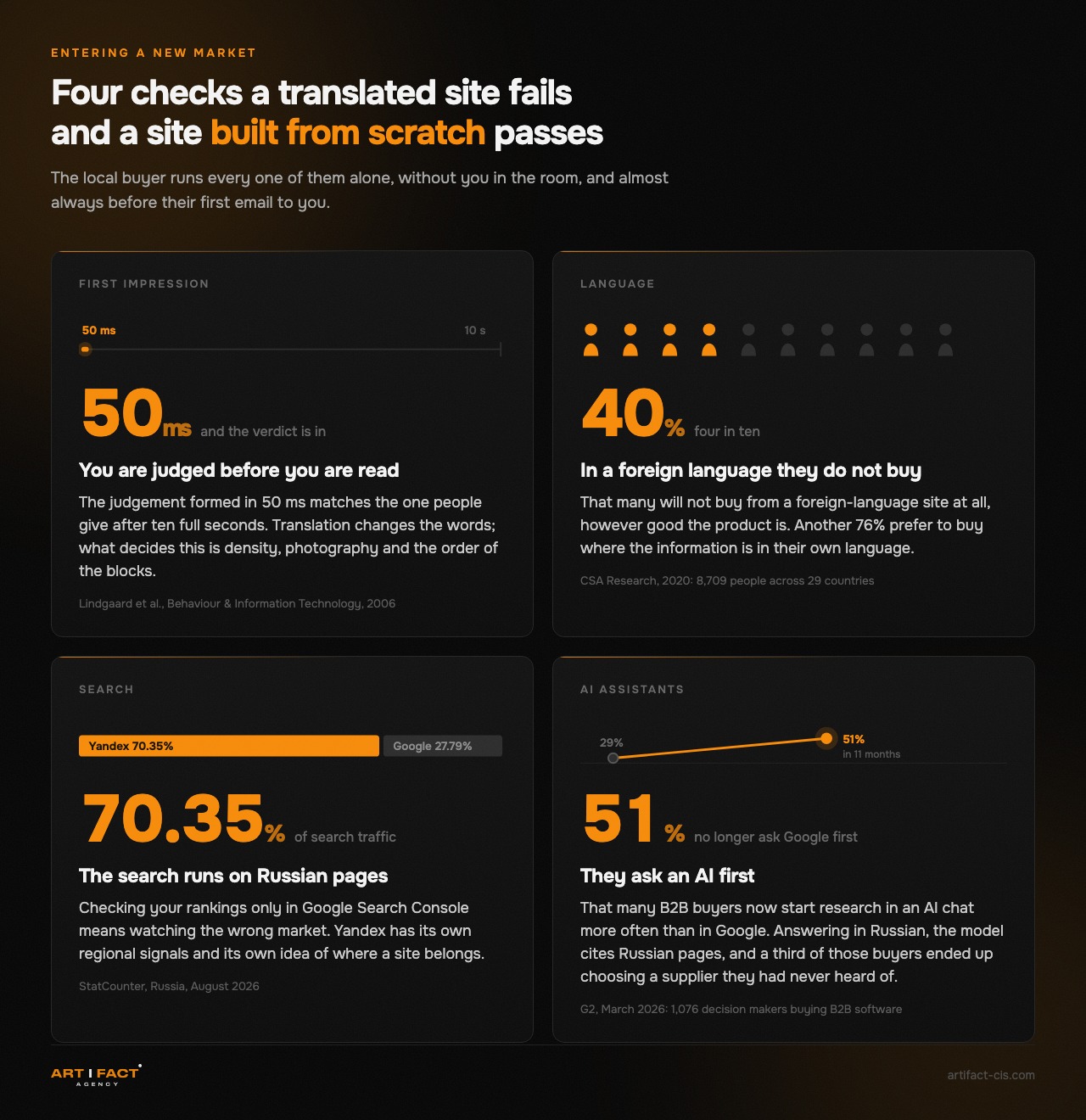
That signal is read before the text. In 2006 Gitte Lindgaard showed people homepages for fifty milliseconds, and their rating matched the one those same people gave after ten full seconds of looking. Fifty milliseconds is less time than it takes to read a headline. The decision about whether this is a serious company is made before the first word. Translation changes the words.
This does not mean language is unimportant. CSA Research surveyed 8,709 people in 29 countries: 76% prefer to buy where the information is in their language, and 40% will not buy from a foreign-language site at all. The language is mandatory. It just closes the second half of the problem rather than the first.
What a separate site gives you
It looks the way this market expects. Not "beautiful" in the abstract, but recognisable to a specific market: the information density, the type of photography, the order of blocks a local buyer uses to decide in a fraction of a second that this is a normal supplier. That is the only way to pass the check that happens before reading.
It is written, not translated. CSA Research has one more number: 66% of respondents run pages through machine translation themselves. If your text was written in English and then translated into Russian, a share of readers will get it after a second machine pass on top of the first. Text written in Russian from the start, by someone who works in that market, never enters that chain: the industry terms in it are the ones a local buyer actually says, not the ones a translator produced.
It is found where people search. In August 2026, Yandex held 70.35% of Russian search traffic against Google's 27.79%, according to StatCounter. A company that only checks its rankings in Google Search Console is watching the wrong market, most likely one the buyer never visits. Since late 2020 Yandex has ranked pages through YATI, a transformer-based algorithm that scores the semantic closeness of a query and a document rather than just matching keywords. Writing directly in Russian, in the phrasing a local buyer actually searches with, holds up better against that system than translating finished English copy and hoping the meaning survives the trip. The same goes for AI assistants: answering a question in Russian, they assemble the answer from pages written in Russian.
Why a new one, if you already have a site
The old site does not go anywhere. It keeps working on the home market, where it was built correctly.
The question is what you send into the new region. A translated version of the home site arrives carrying the entire structure of the home market: the same order of blocks, the same idea of what to say first, the same arguments that persuaded people in a different country. It does not crash and it reports no errors. It simply fails a check that ends in fifty milliseconds, and you never find out, because the rejection looks like an absence of enquiries.
A separate site costs money and several months of work. That is the honest price. What you get for it is a working instrument in the new market, rather than a copy of the one that works in the old one.
Artifact builds those sites from inside the market you are entering, out of Almaty.